I'm Thinking About Buying a Home. Should I Buy Now or Wait a Year?
In wrapping up 2024, I discussed the potential
for 2025 to bring greater stability and balance to our housing market. What
does "more balance" mean? It translates to increasing inventory for buyers,
slightly reduced competition, and a buying process that feels less stressful.
It also suggests easing interest rates within a cooling inflationary
environment that is less volatile.
At the time of writing that letter, all indicators pointed toward these
positive changes. We were seeing increased market activity with growing
inventory and a general sense of optimism. It seemed 2025 was shaping up
to be a year of greater stability and fewer challenges.
However, recent developments have shifted expectations. Over the past
several weeks, the market has encountered turbulence, most notably with
an unexpectedly strong jobs report. While a strong job market is generally
positive news for the economy, it raises concerns for investors. A robust
labor market could signal that inflation isn't slowing as anticipated,
potentially leading the Federal Reserve to adjust its plans. Initially, the Fed
projected three interest rate cuts in 2025, but recent signals suggest only
one, or potentially none. The 10-year treasury yield has been hovering
below 5%, which could lead investors to move money away from stocks
and other assets.
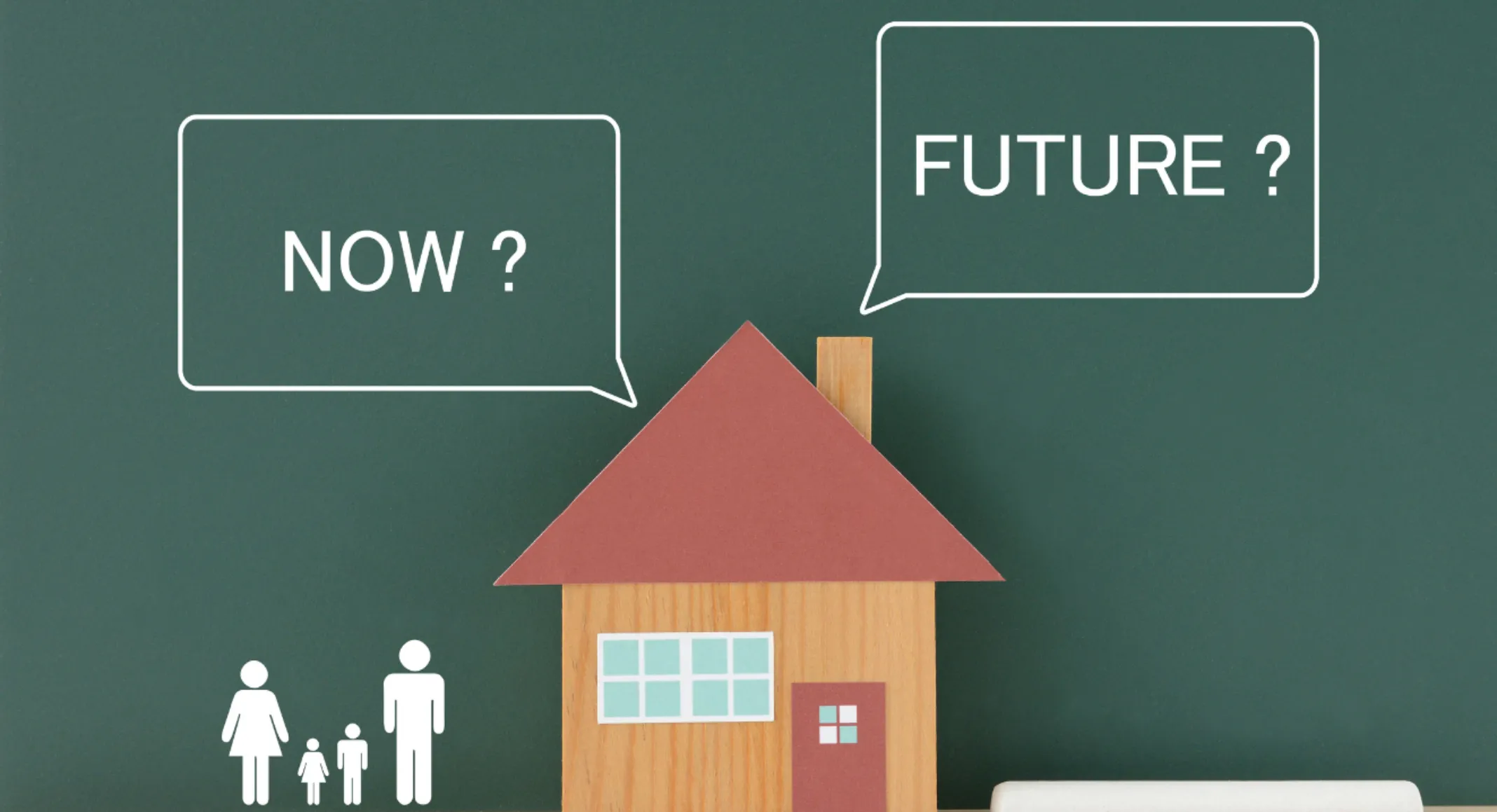
Given this uncertainty, many potential homebuyers are left wondering:
Should I buy a home now or wait another 8-12 months to see how interest
rates and the broader market evolve?
Breaking It Down
To provide a logical approach to this decision, let's focus on three key
factors every homebuyer should consider:
How long will you stay in the home?
Will housing prices continue to go up?
Will interest rates be lower in a year?
How Long Will You Stay in the Home?
Life is unpredictable—career changes, family growth, and relocation needs
can arise unexpectedly. However, it's essential to estimate how long you
plan to stay in your home. The duration of your stay can significantly
impact your financial situation, as homeownership comes with both
upfront and ongoing costs.
We advise our clients that if they plan to stay in a home for less than two
years, purchasing may not be the best choice. Owning a home involves
costs beyond the mortgage payment, including property taxes, insurance,
maintenance, and potential unexpected repairs. In the short term, these
costs can outweigh the benefits of ownership, especially if market
conditions don't provide significant appreciation.
However, if you plan to stay in your home for at least 3-5 years,
homeownership becomes a much more viable option. Over this timeframe,
you have a greater chance of building equity and benefiting from market
appreciation. Additionally, the cost of rent typically increases over time,
meaning homeownership could provide a more stable and predictable
monthly expense. Assess your lifestyle, career goals, and future family plans
to determine if homeownership aligns with your long-term vision.
Are Housing Prices Going Up?
Before diving into this question, it’s important to understand a key concept
—leveraged funds. When you buy a home, you’re benefiting from an asset
worth hundreds of thousands of dollars while only investing a fraction of
that amount as a down payment.
For example, if you put down $30,000 on a $315,000 home, and its value
increases to $350,000 over two years, you gain the full $35,000 in
appreciation—more than doubling your initial investment. This is the
power of leveraging your money in real estate.
Unlike the stock market, where annual returns of 10-12% are often
expected, the housing market doesn’t need such dramatic growth to be a
worthwhile investment. Even a modest increase of 3-5% per year can build
substantial equity over time—allowing you to grow wealth simply by living
in your home.
So, will housing prices continue to rise? The short answer: Yes, we believe
so. Over the past year, my team and I have consistently shared our outlook
that home prices will likely trend upward over the next 3-5 years. The
reasoning is simple—supply and demand.
While we can’t predict the future with certainty, several key factors indicate
continued appreciation:
Low housing inventory – Supply remains historically low.
Rising construction costs – Builders face increasing labor and material
expenses.
Population growth – Demand continues to outpace supply.
These trends, among others, suggest that housing prices are likely to
remain on an upward trajectory.
For a deeper dive into these market factors, check out our annual letter,
where we break down each element driving home prices today.
In short, with low supply and strong demand, housing prices are expected
to keep climbing—making homeownership a valuable long-term
investment.
Will Interest Rates Be Lower in a Year?
Interest rates have been on top of everyone's mind over the last year.
Initially, the Federal Reserve suggested multiple rate cuts in 2025, offering
hope for lower mortgage rates. However, recent economic data, such as
strong job reports, have led the Fed to scale back its outlook, with fewer or
no rate cuts likely.
This uncertainty means waiting to buy a home in hopes of lower rates
carries risk. If rates stay the same or even rise, waiting could lead to higher
monthly payments and increased purchase prices due to continued home
appreciation.
Mortgage rates are influenced by various factors, including inflation,
economic growth, and monetary policy. While predicting exact future rates
is challenging, current market indicators suggest that rates may remain
higher than pre-pandemic levels for the foreseeable future. Locking in a
rate now might provide stability and peace of mind, especially if you plan
to stay in your home for the long term.
If you're considering waiting for rates to drop, it's important to evaluate
how much a potential decrease would truly impact your affordability. For
example, a small rate reduction might lower your monthly payment by a
few hundred dollars, but if home prices continue rising, the total cost of
homeownership could still increase.
The Cost of Waiting
Let's consider a scenario. Suppose you are eyeing a $400,000 home today.
If prices appreciate at a modest 5% per year, that home will be worth
$420,000 next year and $441,000 in two years. Even if interest rates were to
decrease slightly, the higher purchase price might offset the benefit of a
lower rate.
This means that waiting could cost you an additional $20,000 to $40,000 or
more, potentially negating any savings from a lower mortgage rate.
Conclusion
Ultimately, the decision to buy now or wait should be based on your
personal circumstances and financial goals. If you're planning to stay in
your home for at least 3-5 years and can afford today's rates, buying now
may offer the best opportunity to build equity and avoid rising home
prices. On the other hand, if your future is uncertain, it may be wise to hold
off and re-evaluate your situation in the coming months.
In today's market, making an informed decision is more important than
ever. Whether you decide to buy now or wait, staying informed and
working with knowledgeable real estate professionals will help you
navigate the complexities of the housing market with confidence.
Written By
Sam Wurm, Executive Vice President of Nebraska Realty and Embarc Realty